
What AI Video Ads Actually Cost in 2026 (and What Agencies Should Charge for Them)
Short on Time — The GistOct 2026 · 2 min read
An AI video ad in 2026 can cost anywhere from about $11 to $10,000+. The spread depends on who makes it. Self-serve tools produce avatar-style clips for a few dollars each. Directed AI studios typically charge $1,000 to $10,000 per finished spot. Traditional production for a short social ad runs $1,500 to $5,000, and a 30-second commercial runs $5,000 to $50,000+.
The cheapest option is rarely the cheapest result. What you pay for at the studio level is direction: the concept, the rejected takes, product accuracy, sound, and revisions.
Volume matters more than it used to. Meta recommends creative diversification, meaning distinctly different concepts, not ten colors of the same ad. The budget that buys one traditional shoot can buy a month of distinct AI concepts to test.
For agencies, the margin comes from pricing the work on what it does for the client, not on what the tool costs.
The Four Ways to Get an AI Video Ad Made
When a client asks what an AI video ad costs, the honest answer is "which kind?" The term covers everything from a five-dollar avatar clip to a directed cinematic spot. Here's how the market breaks down in 2026.
| Option | Typical Cost | What You Get |
|---|---|---|
| Self-serve AI ad tools | About $11 per video on reported Arcads plans; other tools run $29–$99 a month | Template-driven clips, mostly AI avatars talking to camera. Fast and cheap for testing hooks. |
| UGC creators (filmed) | $150–$500 per video for most creators | A real person on a phone. Raw footage often costs extra to edit. |
| Directed AI studios | $1,000–$10,000+ per spot | Concept, direction, product integration, sound, and revisions. Finished and ready to run. |
| Traditional production | $1,500–$5,000 for short social; $5,000–$50,000+ for a 30-second commercial | Crew, location, talent, and editing. One environment per shoot day. |
Those ranges come from published 2026 pricing guides, listed at the end of this post. Most are written by companies that sell one of these options, including us, so treat any single number with some skepticism. The pattern across all of them is consistent, though: the gap between the bottom and top of the market is 100x or more, and the gap is mostly human time.
Why the $11 Ad Usually Isn't $11
Self-serve tools are real, and for some jobs they're the right call. If you need twenty talking-head hooks to find out which opening line works, an avatar tool will get you there for lunch money.
The sticker price hides three costs, though.
1. Cost per keeper, not cost per clip
Pricing reviews of these tools point out that every small change means regenerating the whole clip. If one usable ad takes four or five attempts, the real cost is several times the listed price, before anyone counts the hours spent prompting.
2. Your team's time
At an agency, someone on payroll writes the prompts, reviews the outputs, fixes the edits, and sources the music. An $11 clip that eats three hours of a strategist's afternoon is not an $11 clip.
3. Format ceiling
Most self-serve tools are built around avatars talking to the camera. They can't put your client's actual product in a desert canyon at golden hour, light it correctly, and cut it to music. When the brief calls for a world rather than a face, the tool runs out of road.
A note on AI testimonials: avatar videos presented as real customers are a trust problem waiting to happen. We don't make them. Ads with original AI people using a product are standard advertising. Ads pretending those people are real reviewers are not.
What You're Paying for at the Studio Level
Generating footage is the cheap part. One AI studio owner put it plainly in his own 2026 pricing breakdown: most of the budget goes to concept, story structure, and brand positioning, not the generation itself. That matches what we see. A finished Wrayven social ad includes:
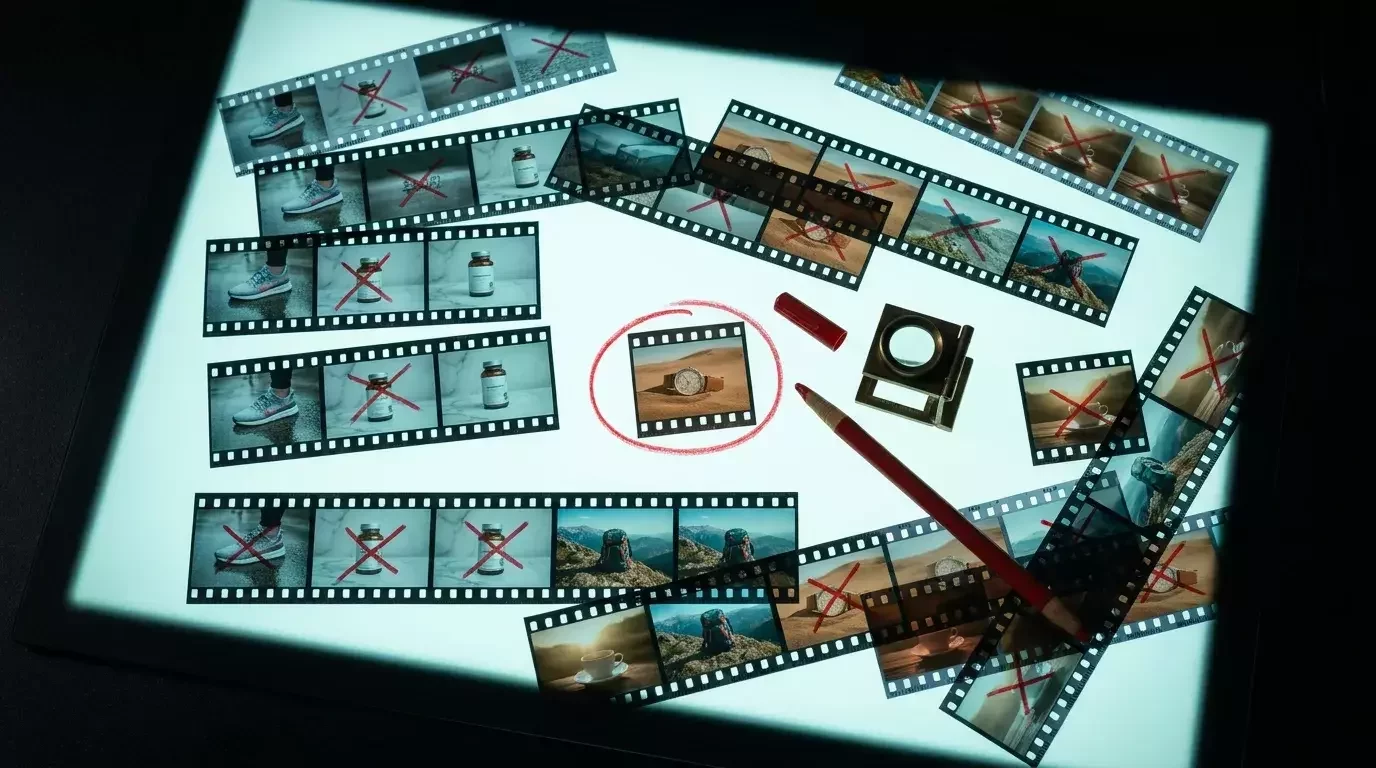
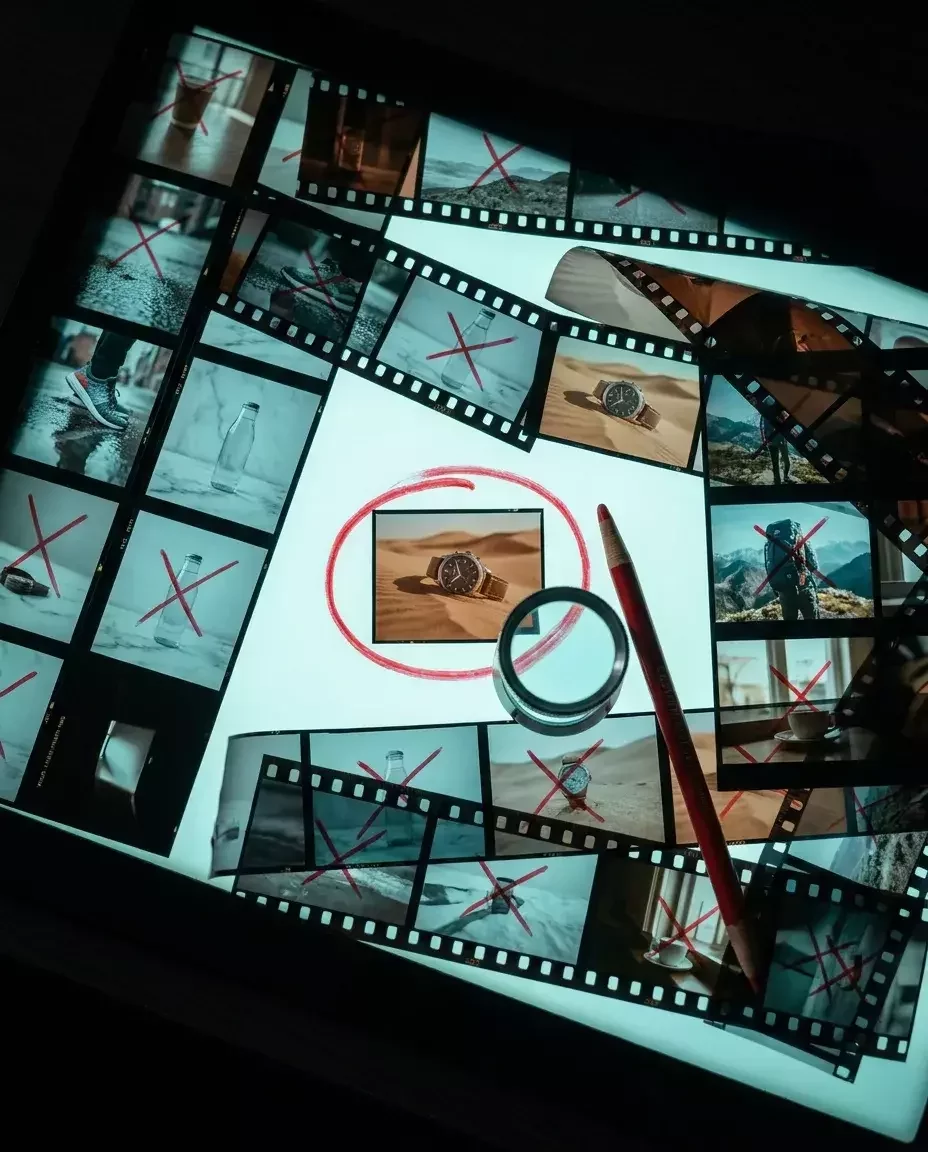
The rejected takes are the part nobody sees and the part that matters most. Whether an ad looks generated or looks shot usually comes down to how many frames someone was willing to throw away.
Why Volume Matters More in 2026
Meta's delivery system has changed how much creative an account needs. Meta's own guidance to advertisers is that creative diversification will help advertisers get the best results, and practitioners like Jon Loomer have spent the past year explaining what that means in practice: the creative itself now does much of the job audience targeting used to do.
There's an important catch. Loomer notes that variations which aren't distinctly different are unlikely to change performance. Ten versions of the same ad in different colors don't count. Meta needs different concepts, environments, hooks, and formats to work with.
That is where traditional production breaks down. It's priced per shoot day, and a shoot day gives you one environment.
| A $10,000 Budget | Traditional Production | Directed AI Production |
|---|---|---|
| What it buys | One short shoot, or part of one commercial | Roughly 10 social ads, or a month of Core |
| Distinct concepts | 1–2 | 4–6 or more |
| Environments | One location | As many as the concepts need |
| Time to first ad live | Weeks | Days |
| If the concept flops | Budget's gone | Next concept is already in the queue |
Proof It Holds Up in a Paid Campaign
A tactical gear brand needed a Meta ad for its ATE GEN2 ballistic helmet, set in a desert environment that would have meant permits, travel, and a crew. Wrayven produced a 15-second AI video ad. It ran on Meta for 30 days. On $2,500 in ad spend, it brought in $35,000 in attributed revenue.
One ad isn't a trend. Across four tracked paid campaigns, Wrayven creative has a median ROAS of 11.7x. Results also depend on the offer, the media buying, and the category. The details are on our case studies page.
How Agencies Should Price AI Video for Clients
This is the question we hear most from agency owners, and the mistake we see most is pricing against the tools. If you quote a client based on what AI generation costs, you're competing with an $11 subscription, and you'll lose that race.
Price on what the work replaces and what it produces instead. Three models work:
1. Per-asset pricing
Bill each finished ad at a rate that reflects its value to the client. That's usually somewhere between what a UGC creator costs and what a traditional shoot costs. Your production cost and your client rate are separate invoices, and your margin is yours.
2. A monthly creative retainer
Fold a set number of new concepts per month into your management fee. This fits how Meta now rewards fresh, distinct creative, and it turns creative from a one-off project into recurring revenue.
3. A paid test sprint
Sell a fixed package, for example six distinct concepts in two weeks, priced as a test. If a concept wins, the client renews for more. This is the easiest way to get a skeptical client to say yes.
Your client compares you to a $5,000–$50,000 shoot,
not to an $11 app.
Price the outcome, not the tool.
One more thing: be upfront with clients that the creative is AI-produced. Most of them want the speed and volume, and it's a selling point, not a secret. What stays private is who your production partner is. That's what white label is for.
What Wrayven Costs
Published pricing, same as always.
Every project includes all standard aspect ratios, two revision rounds, and full commercial usage rights. Social ads deliver in three business days. All agency work is white label: nothing we deliver carries our name, and we never contact your clients. Full details are on the Partner Program page.
Common Questions
How much does an AI video ad cost in 2026?
Self-serve AI tools produce avatar-style clips for under $1 to about $11 per video. Directed AI studios typically charge $1,000 to $10,000+ per finished spot. Traditional production for a short social ad runs $1,500 to $5,000, and a 30-second commercial runs $5,000 to $50,000+.
Are cheap AI ad tools good enough for paid campaigns?
For testing talking-head hooks, often yes. For ads that need a real product in a real-looking environment, with correct lighting, sound, and pacing, a self-serve tool usually can't get there. The listed price also leaves out failed generations and your team's time.
How many ad creatives does a Meta account need?
There's no fixed number. Meta recommends creative diversification: distinctly different concepts, formats, and hooks, rather than small variations of one ad. Many performance teams now plan for several new concepts per account each month.
What should an agency charge clients for AI video ads?
Price on the value of the finished ad and what it replaces, not on what the AI tool costs. Common models are per-asset pricing, a monthly creative retainer, or a fixed test sprint of several concepts. The agency's production cost and its client rate are separate, and the margin stays with the agency.
Do ads need to say they're AI-generated?
It depends on the platform, the category, and the region, and the rules are changing. Some platforms label AI content automatically. Check the current policy for each platform before launch, and don't remove AI labels or provenance data from the files.
- Vidico — Video Production Cost: What You'll Actually Pay in 2026
- eesel — Arcads AI pricing in 2026: plans, credits, and the real per-video cost
- inReels — How Much Do AI Video Ads Cost? Full Breakdown 2026
- Mohammad Nasravi — How Much Does an AI Video Commercial Cost in 2026?
- Jon Loomer — Meta Andromeda and Creative Diversification
- Wrayven — Case Studies
Send one brief. See what a directed AI ad looks like in three business days.