
What a Lifestyle Shoot Actually Costs in 2026 and What Brands Are Doing Instead
Short on Time — The GistUpdated Oct 2026 · 2 min read
A traditional lifestyle photo and video shoot for a mid-sized brand costs between $8,000 and $40,000 for a single day of production. That number does not include retouching, reshoots, product shipping, or the weeks of waiting. For brands at the growth stage, that budget is often the entire marketing spend for a quarter.
AI creative production delivers premium lifestyle imagery and video across multiple environments for roughly 90% less, with social ads and ad creative packages delivered in 3 business days. Not a rough draft. A finished, market-ready deliverable.
Hard Head Veterans, a tactical gear brand, used a Wrayven-produced 15-second AI video ad instead of a traditional shoot. On $2,500 in Meta spend over 30 days, the ad returned 14x ROAS and $35,000 in attributed revenue. They saved on production and the ad paid for itself many times over.
The brands finding Wrayven aren't doing it because AI is trendy. They're doing it because the math stopped making sense the old way.
What a Traditional Lifestyle Shoot Actually Costs
You had an idea for your brand. A lifestyle shoot. Something cinematic — real environments, real lighting, the kind of imagery that makes people stop scrolling. So you reached out to a photographer or a production company, asked what a lifestyle shoot costs in 2026, and got a number back that made you close the tab.
That quote wasn't inflated. That's what it actually costs.
And that's for one shoot. One day. One environment. One set of images that you'll be using for the next six months because there's no budget left for another round.
The brands competing against you at the top of the feed? They're shooting quarterly. Seasonal refreshes, new campaign angles, platform-specific variations. Not because they're flush — because they found a way to make the math work differently.
The Hidden Production Costs Nobody Talks About
The invoice is the visible cost. The invisible costs are what actually kill the budget.
You ship your product to a studio in another city. You spend three days in email chains aligning on shot lists. The photographer delivers 400 raw files and you spend two weeks in approval rounds. Six weeks after the brief was written, you have images for one product in one environment — and a $14,000 hole where your Q2 creative budget used to be.
A brand with 500 SKUs can expect to spend $125,000 to $250,000 per year on traditional photography. Double the products, double the spend. There is no scaling this.
The math doesn't get better with volume. It gets worse. Every new product, every new season, every new platform format requires a new round of the same expensive, slow process. Traditional production has a roughly linear cost curve. More content means proportionally more money and time. Always.
That's the problem. Most brands have accepted it as the cost of doing business because there wasn't a real alternative. Until recently.
How AI Creative Production Delivers the Same Result for 90% Less
AI creative production isn't a filter on a stock photo. It isn't a template. It's a complete production process — directed, composed, and delivered at a standard that holds up in paid campaigns, on product pages, and in brand identity work.
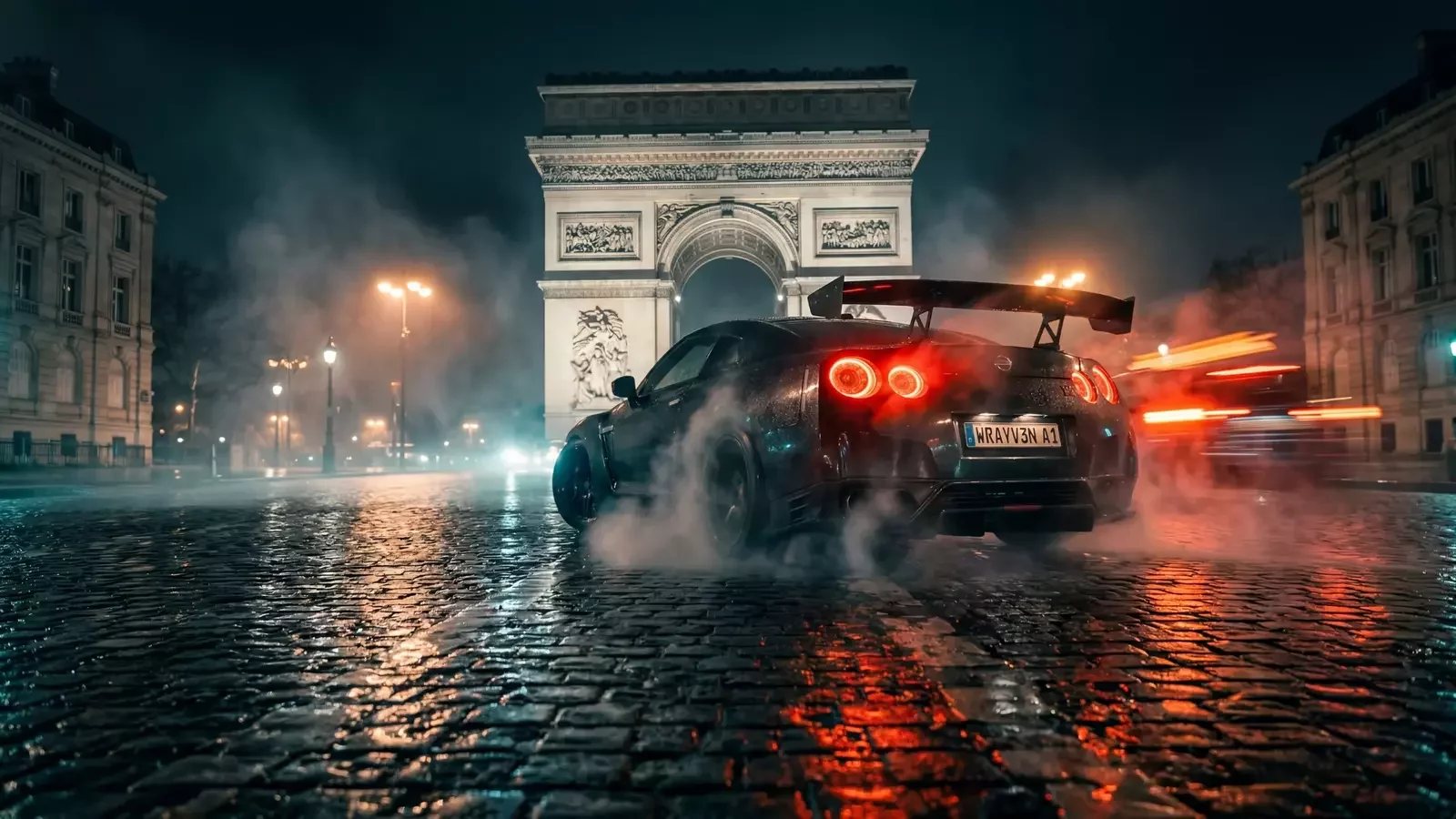
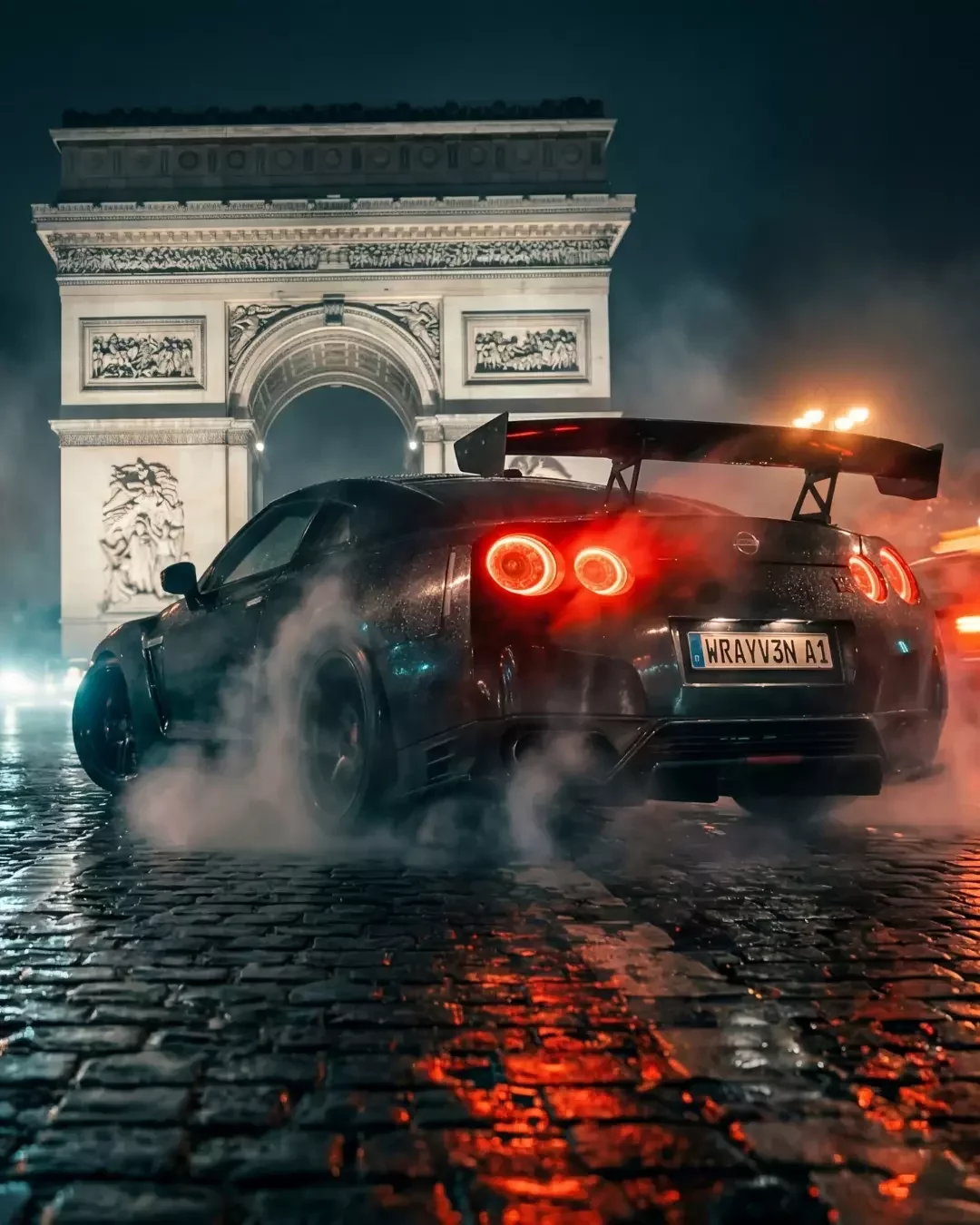
Your product in a desert canyon at golden hour. On an Icelandic coastline. In a minimalist apartment with directional morning light. Environments that would require a production budget, travel, permits, and a two-week shoot to replicate traditionally. Directed and delivered in days, not weeks.
What costs $8,000 — $40,000 traditionally
starts at $1,000 with Wrayven.
Delivery in as little as 3 business days. Two revisions included.
| Traditional Production | Wrayven AI Production | |
|---|---|---|
| Starting cost | $8,000 — $40,000+ | From $1,000 (video) / from $1,500 (imagery) |
| Turnaround | 3 — 6 weeks | 3 business days for social ads and ad creative packages; 5 days to 2 weeks for larger builds |
| Environments | Whatever you can afford to travel to | Unlimited |
| Seasonal variations | New shoot, new budget | New brief, same turnaround |
| Revisions | Reshoots cost extra | 2 rounds included |
| Visual consistency | Varies by photographer and day | Built into the direction process |
| Proven in paid campaigns | Depends on the shoot | 11.7x median ROAS across 4 tracked campaigns |
AI Video Production in a Live Paid Campaign
Claims are easy. Here's a Wrayven production that ran in a live paid campaign. No filters. No qualifications.
That's a 15-second AI video ad produced for Hard Head Veterans, a tactical gear brand. Desert environment. Operator movement sequence. Hard-driving audio. Produced without a crew, a location scout, or a travel budget.
Hard Head Veterans needed a Meta campaign ad for the ATE GEN2 ballistic helmet. The brief called for cinematic production in a desert environment — the kind of location that traditionally requires permits, a crew, travel, and a production budget most tactical gear brands don't have. Wrayven produced a 15-second AI video ad. It ran on Meta for 30 days. On $2,500 in ad spend, it brought in $35,000 in attributed revenue.
The production cost was a fraction of a traditional desert shoot, and the ad returned fourteen dollars for every dollar spent. That combination — cheaper to produce, better performing in market — is the outcome traditional production physically cannot deliver because its cost structure won't allow the volume and variation that AI production makes routine.
This wasn't a one-off result. Across four tracked paid campaigns in heavy equipment, education, tactical gear, and supplements, Wrayven-produced creative has generated more than $932,000 in reported revenue from just over $30,000 in ad spend, at a median ROAS of 11.7x. One high-ticket equipment campaign drives most of that revenue; the other three returned 10.4x combined. Results depend on offer, media buying, and category, too. The full breakdown, including a pet wellness brand identity built before launch, is on the case studies page.
Who AI Production Makes Sense For — and Who It Doesn't
AI creative production isn't for every brand at every stage.
If you're a Fortune 500 with an agency of record and a seven-figure production budget, you should probably keep filming traditionally. That infrastructure exists for a reason and your scale justifies it.
But if you're a brand at the growth stage — proven product, tightening creative budget, a content need that outpaces what traditional production can deliver — this is the gap Wrayven was built for. The stage where looking premium matters most is the stage where traditional production is least affordable. That gap is not an accident of circumstance. It's the specific problem this solves.
The brands that will win the next three years of performance marketing aren't the ones with the biggest production budgets. They're the ones producing the most creative variations at the highest quality. AI production is how you get there.
For Brands
If your creative budget caps out at one shoot per quarter and you're competing against brands that refresh monthly, the math is working against you. AI creative production gives you the volume and variation that traditional production reserves for companies ten times your size. Your product in five environments, three seasonal variations, and platform-specific crops, delivered in days for less than a single traditional shoot day costs. Start with the contact page and tell us what you need.
For Performance Marketing Agencies
The same logic applies at scale. Your clients need more video and imagery than any traditional production relationship can sustain at margin. Wrayven operates as a white label production partner: you brief, we produce, you deliver and invoice at your rate. Nothing we deliver carries our name, and we never contact your clients. The relationship stays yours. Project pricing is on the video production and imagery service pages. Agencies that need new creative every month can move to Core, our Partner Program plan: reserved monthly capacity and one consistent creative lead who learns your clients.
What Wrayven Actually Costs
No "contact us for pricing." No hidden rate cards. Here's what it costs.
Every project includes all standard aspect ratios, two revision rounds, full commercial usage rights, and unlimited environments. Complex briefs involving multi-product compositions or extensive multi-environment builds may carry a complexity premium, always quoted before work begins. Agencies with ongoing volume can see Core and Scale pricing on the Partner Program page.
See the full case studies or start a conversation about your next project.